You saw each other.
You both wish you’d said hello.
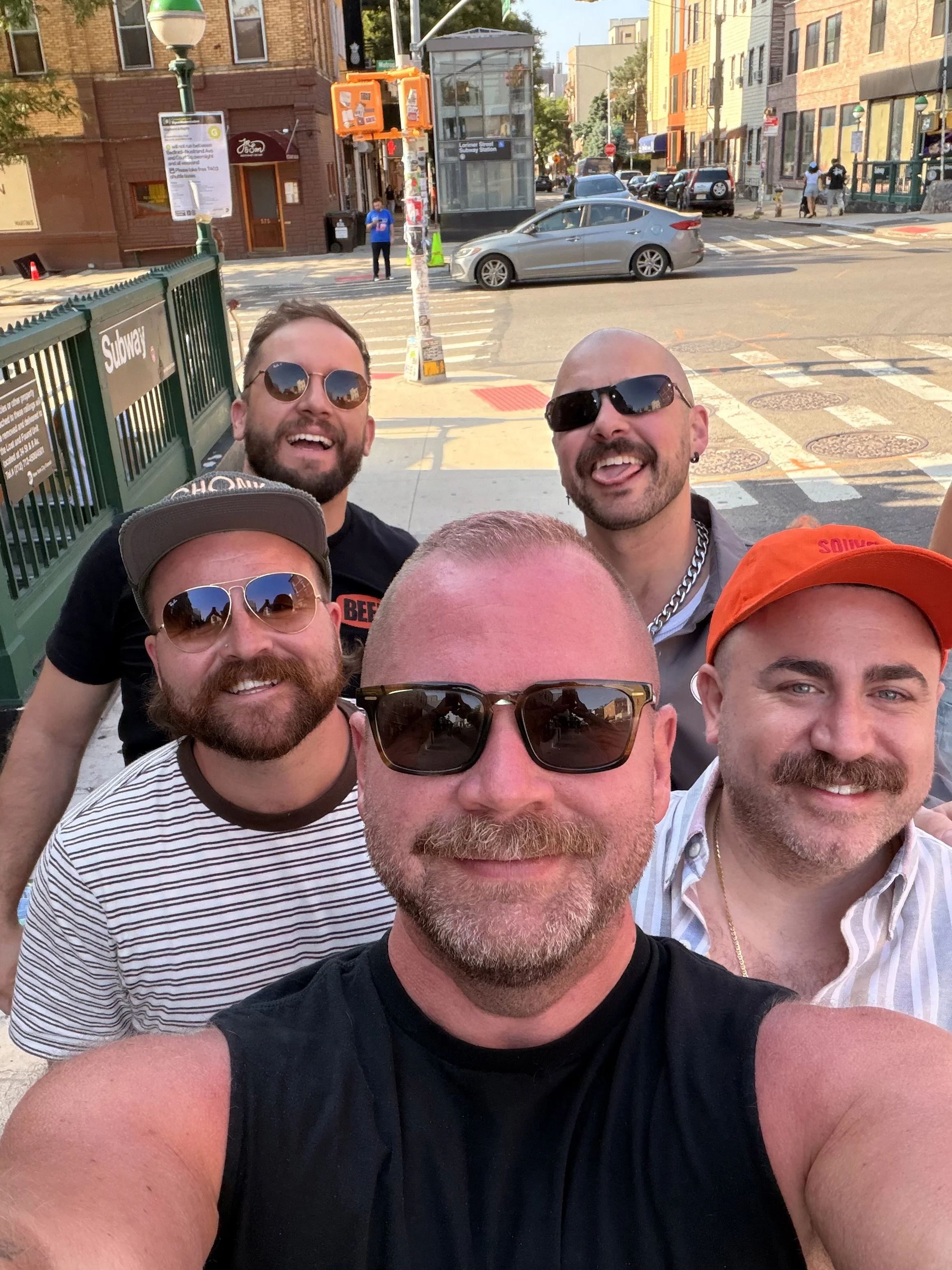
What Is a Missed Connection?
Someone got off at Bedford before you worked up the nerve. The line at the coffee shop moved faster than your courage. You held eye contact for three stops and then the doors opened and that was the entire relationship.
A missed connection is the message you write afterward, addressed to a person who will probably never read it.
It's one of the oldest genres on the internet, and one of the few that has survived every platform shift intact — not because anyone has built it well, but because the underlying human problem refuses to go away. This page covers what a missed connection actually is, how Craigslist made it a cultural form, what happened when Craigslist got out of the way, where the genre lives now, and why every dating app that has tried to solve it has quietly killed the feature.
You, blank tank top, Bedford Ave
·
Silver daddy and his terrier at the dog run
·
We both reached for a 50lb. dumbbell
·
3am bodega, you paid for mine
·
You, blank tank top, Bedford Ave · Silver daddy and his terrier at the dog run · We both reached for a 50lb. dumbbell · 3am bodega, you paid for mine ·
The anatomy of a missed connection
The form is almost rigidly conventional, which is part of why it works. A missed connection has four parts:
You were. A description of the other person. Clothing, hair, what they were carrying, what they were reading. Never a name, because you don't have one.
I was. A description of yourself, offered so they can place you. This is the part people get wrong — a post that describes only the other person is a wish, not an invitation.
When and where. A timestamp and a location, specific enough to be verifiable. The L train, Tuesday around 8:40pm, second car from the front.
The proof. Some detail only the two of you would know. You said something about the dog. I laughed at the wrong moment. This is what separates a real missed connection from someone fishing.
That last element is doing more work than it looks like. A missed connection is fundamentally an identity-verification problem dressed up as a love letter. The whole genre exists in the gap between "I remember you vividly" and "I have no way to prove that to you."
Craigslist didn't invent it, but Craigslist made it a form
Missed connections predate the internet by decades. Newspaper personals columns in the 1960s and 70s ran them alongside the lonely-hearts ads, and city weeklies kept the tradition going long enough that most people over forty encountered the format in print before they ever saw it online.
Craigslist launched its Missed Connections section in 2000, inside the personals. CEO Jim Buckmaster has said he created it after noticing that a recognizable type of post kept appearing in the personal ads — what he described as the "you-smiled-at-me-on-the-subway-platform" message. It wasn't a product decision so much as an acknowledgment that people were already doing this and needed somewhere to put it.
It became, for about eighteen years, one of the strangest and best-loved corners of the web. Missed Connections was the rare internet space that produced actual literature. It generated illustrated books, plays, poetry projects, blogs devoted to archiving the best posts, and a permanent supply of romantic-comedy premises. Buckmaster himself noted the appeal: the format is about persistence against terrible odds, which is exactly what makes it good material.
It was also, in the way of early Craigslist, completely unmoderated, completely anonymous, and completely free. Those three properties made it work. They are also what eventually made it a liability.
What actually happened to Craigslist Missed Connections
The most common version of this story is wrong, so it's worth getting right.
On March 22, 2018, Craigslist took its entire personals section offline. This was a direct response to FOSTA-SESTA — the Fight Online Sex Trafficking Act and the Stop Enabling Sex Traffickers Act — which amended Section 230 of the Communications Decency Act to make platforms potentially liable for user posts that facilitate sex trafficking. Craigslist posted a short notice saying it couldn't accept that risk without jeopardizing the rest of the site, and wished the millions of couples who'd met there well. Casual Encounters, w4w, m4m, misc romance: all gone overnight, worldwide.
But Missed Connections didn't die. Within days, Craigslist moved it out of Personals and into Community — filed between lost+found and musicians, alongside local events and volunteer listings. It's still there today. Posts still go up hourly in New York.
So the section survived. What died was everything that made it work.
It lost its traffic. Missed Connections had been the whimsical front porch of a section people visited constantly for other reasons. Reclassified as a community bulletin board, it kept its posters and lost its readers. A missed connection with no audience is a diary entry.
It lost images. The Community version doesn't support photos. For a genre built entirely on visual description, that's not a minor formatting change — it removed an entire class of post and killed several long-running archival projects outright.
It never had the mechanics. No accounts, no notifications, no way to be told that someone had posted about you. Posts expire in roughly thirty days. The only way to find out you'd been written about was to independently decide to go looking, in the right city section, in the right month, for a description you'd recognize as yourself. The base rate on that is close to zero.
It aged. No verification, no reputation, a 1999 interface, and — inevitably — spam and bots filling the gaps.
Craigslist has shown no interest in bringing personals back, and under current law there's no reason to expect it will. The legal exposure is identical to what it was in 2018, and moderating a modern personals section is fundamentally incompatible with how Craigslist operates.
[SPOKE: Craigslist Missed Connections alternatives, ranked]
Where missed connections live now
The genre didn't disappear. It scattered.
Instagram and TikTok accounts. This is the dominant format today. As of mid-2026, Instagram carries over 51,000 posts tagged #missedconnections, and at least forty accounts have "missed connections" in their handle. Some are substantial: @missedconnections_PDX, covering Portland, has around 57,600 followers. @missedconnectionsnyc runs the same model here. You DM the account a description; a moderator posts it to the grid.
Reddit. City-specific subreddits, most of them small. r/NYCmissedconnections gets a few hundred visitors a week — real, but a rounding error against the size of the city.
Physical boards. Corkboards in hotel lobbies, bars, and coffee shops have made a genuine comeback, and get written up as novelties every year or so. The analog version has one real advantage: the audience is geographically pre-filtered.
Dating app features. Happn launched in 2014 built entirely on the premise, showing you people whose paths crossed yours within about a 250-meter radius. Match rolled out a feature literally named Missed Connections in 2017, for paying subscribers, showing crossings resolved to an intersection rather than a venue. Tinder tested Places in 2018 — the same idea, keyed to venues you frequent.
Of those three, one persists (Happn, now over 180 million registered users, acquired by Hello Group in September 2025), one was a paid add-on inside a declining product, and one was killed in test markets and never shipped.
That scorecard is the interesting part.
Why apps handle missed connections badly
Not because the engineering is hard. Because the model is wrong in four specific ways.
1. Dating apps are prospective. Missed connections are retrospective.
Every mainstream dating app answers the question who is available near me now? A missed connection asks a completely different one: who was that specific person, in that specific place, at 8:40 last Tuesday? One is a filter over a live inventory. The other is a search against memory. Bolting the second onto an app architected for the first produces exactly what Happn and Tinder Places produced — proximity features that surface strangers you have no reason to think you saw.
2. Passive location detection can't do recognition.
Happn and Places both work by tracking where you've been and cross-referencing it against other users. This requires three things to be true at once: they're on the app, you're on the app, and you can identify a person you saw for ninety seconds from a profile photo taken in different lighting, a different season, and probably a different city. What you remember is a rust corduroy jacket and the way they laughed at the conductor's announcement. What the app shows you is a curated beach photo. The match rate on that is bad in a way that no amount of location precision fixes.
3. The privacy cost is paid up front, by everyone.
Passive detection means continuous background location on every user, all the time, to serve a use case that fires maybe twice a year. Tinder Places drew immediate criticism on exactly this point when it leaked in 2018 — the feature let potential matches map your habits, and Tinder retained the location history regardless. Places was discontinued in its test markets. The privacy math on always-on tracking for an occasional feature has never worked, and it hasn't gotten better since.
A description-based system inverts this: you volunteer a single moment, deliberately, when you have a reason to. Nothing is collected on a background timer.
4. The incentives point the other way.
A dating app's business model rewards session length, swipe volume, and returning users. A missed connection that works is a person who found the one specific human they were looking for and left. It's a churn event with a rounding-error frequency. No product manager at a subscription dating company is getting promoted for shipping it, which is a fairly complete explanation of why the feature keeps getting tested and killed.
There's a fifth problem the social-media accounts have instead: broadcast without addressability. Posting to an account with 57,000 followers means 57,000 people see your message and the one intended recipient almost certainly doesn't. Most of these posts get single-digit engagement. The reach is real and it's pointed in the wrong direction.
Why this is harder — and higher stakes — for queer people
Everything above applies to everyone. For queer people, three additional things are true.
The read is ambiguous. A straight person misreading a moment on the subway risks embarrassment. For a lot of queer people, in a lot of places, misreading a moment carries a different calculation entirely. That hesitation is precisely what produces the missed connection in the first place — the genre is, disproportionately, a queer form, because queer people have more reason to hesitate.
The venues are disappearing. Sociologist Greggor Mattson's research found that 36.6% of U.S. gay bar listings vanished between 2007 and 2019. The declines were far steeper at the margins: lesbian bar listings dropped 51.6%, cruisy men's bars 59.3%, and bars serving people of color 59.3%. Roughly another 15% closed between 2019 and 2021. As Mattson has pointed out, in most of the country the gay bar is the only place queer people can reliably expect to encounter each other in public. Fewer of them means more queer encounters happening in ordinary, unmarked space — the bodega, the gym, the platform — where the read is harder and the stakes are higher.
Public posting can out people. A description on an open Instagram grid or an indexed Craigslist page is a description anyone can read, including people who know the person being described. "Tall, shaved head, trans pride pin, Wednesday at the Y" is a searchable public record about someone who never consented to it. This isn't a hypothetical concern; it's a design constraint, and none of the existing options treat it as one.
[SPOKE: Queer missed connections and the problem of the read]
What a missed connection app would actually need
Working backward from all of that, the requirements are clear enough to write down:
Focus on the encounter, not the directory. The input is a moment you choose to describe, not a grid of faces sorted by distance.
Searchable and addressable. Time, place, and description need to be structured data, so the person being described can find themselves — and be found!
Notification, not archaeology. The single largest failure of every existing option is that the right person never learns the post exists. Discovery has to be pushed, not browsed.
Verification through detail. The proof element of the classic format, made into a mechanic rather than a convention.
Private by default. Not indexed, not public, not a permanent searchable record of a stranger's body.
Dense enough to work. Missed connections are a local-network product. In a city with no users, every post is a message in a bottle. This is why Hank is launching in New York first.
We're building Hank because the missed connection has outlived Craigslist, outlived FOSTA, outlived three separate attempts by major dating apps, and still has no home. It's a genuinely good idea that has never once been given a serious product.
If you have a person you never got to say anything to, we're building this for you. Join the waitlist →
Frequently asked questions
Does Craigslist still have missed connections? Yes. It survived the March 2018 personals shutdown by being relocated to the Community section, where it still runs today. It lost photo support, most of its readership, and the adjacency that made it work, but posts still go up daily in major cities.
Why did Craigslist shut down personals? FOSTA-SESTA, passed by Congress in March 2018 and signed that April, amended Section 230 to expose platforms to liability for user posts facilitating sex trafficking. Craigslist removed its personals section within a day rather than take on that risk. Missed Connections was moved rather than deleted.
Are Craigslist personals coming back? Almost certainly not. The law hasn't changed, and moderating a personals section at that scale doesn't fit how Craigslist operates.
What's the best missed connections app? Currently, there isn't a good one. Happn is the closest mainstream option and works on passive location crossings rather than descriptions. Most people fall back on city-specific Instagram accounts or subreddits, which have reach but no way to notify the person you're actually looking for.
Do missed connections ever work? Occasionally, and the successes are memorable enough to keep the genre alive. The honest odds on any single Craigslist or Instagram post are low, mostly because the intended reader has no reason to look. Therapists who work with dating clients tend to make the same argument regardless: posting costs you nothing, and not posting guarantees the outcome.
Is it creepy to post a missed connection? It depends almost entirely on how much identifying detail you publish, and where. Describing a stranger's body on a public, search-indexed page is a different act from sending a private, verifiable note. Whether a missed connection is flattering or invasive is mostly decided by where it gets posted, not by what it says.
Sources
Craigslist personals shutdown and FOSTA-SESTA: The Stranger, International Business Times
Origins of the format and current social-media migration: New York Post, May 2026, Wikipedia: Missed connection
Tinder Places: Tinder newsroom, TechCrunch
Match's Missed Connections feature: TechCrunch
Gay bar closure data: Greggor Mattson, "Are Gay Bars Closing?" Socius (2019), LGBTQ Nation